A Designer's Take on the Vintage Street Food Vendor Cart
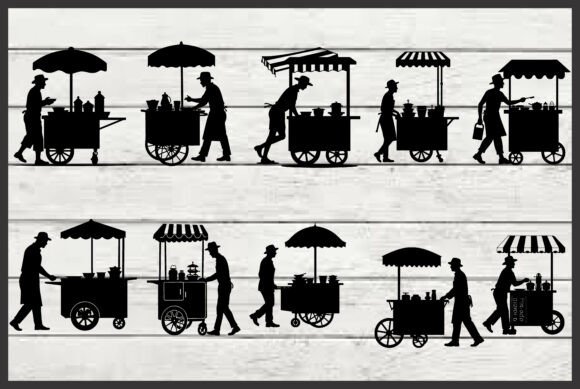
Whenever a new design hits my inbox, my first question isn’t about its specs—it’s about its soul. What story does it tell, and can my needle tell it well? The Vintage Street Food Vendor Cart design immediately grabbed me. It isn’t just a graphic; it’s a narrative piece. That silhouette, with its detailed wheels and classic cart shape, evokes nostalgia and warmth. It feels like a Saturday morning at a farmers' market or a cozy corner coffee shop. This isn’t a generic icon; it has a personality, and that’s gold for any embroidery project aiming to connect on an emotional level.
Where This Design Finds Its Home
I mentally start draping this design over different surfaces. Its clean, detailed vector lines mean it translates beautifully to stitch. For a custom apparel project, imagine it on the breast of a canvas tote bag for a boutique bakery. It’s the perfect size and theme. On a chef’s apron, it becomes a badge of passion. For a personalized gift, embroidered onto a linen pillow cover for a coffee lover’s home, it adds a touch of curated charm without being overpowering.
I see it working exceptionally well for small business merchandise. An Etsy seller specializing in cafe-themed goods could use this as a core element on tea towels, embroidered patches, or even baby clothes for a foodie family’s nursery. The design’s simplicity ensures it remains legible and attractive even when stitched smaller, making it suitable for caps or the corner of a kitchen towel. Its vintage aesthetic lends instant brand consistency to a line of products.
The Real-Life Embroidery Scenario: A Custom Tote
Let’s walk through a real case. A client wants a custom embroidered tote as a gift for a friend who just opened a coffee cart business. The Vintage Street Food Vendor Cart is the obvious choice. My first thought is fabric: a sturdy, natural cotton canvas. The design’s silhouette nature means it will rely on fill stitch areas for the cart body. I’d consider using a slightly contrasting thread—a warm brown instead of pure black—to soften the vintage feel. Because it’s a vector design, the lines are crisp, but I’ll need to ensure my machine’s stitch density is adjusted so those finer details, like the cart’s spoke lines, don’t get lost or become too dense, risking puckering.
On a curved surface like a cap, I’d be more cautious. The design’s rectangular base might need slight resizing to fit the curve without distortion, and a firm stabilizer is non-negotiable. On thin or stretchy fabric, like a t-shirt, I’d likely recommend turning this into an applique to reduce stitch count and maintain fabric integrity, using the vector outline as a perfect template.
Navigating Potential Pitfalls with Confidence
This design’s strength is its detail, but that requires attention. On very small hoop sizes, the intricate parts could blend into a blob if the stitch settings are off. Always test the design on scrap fabric first. I’d run a sample on both a light and a dark fabric background to see how the thread colors perform. Does it hold its charm in reverse on a black sweatshirt? Usually, silhouette designs do.
For products that need frequent washing, like baby blankets or aprons, the stitch area’s density is key. Too dense, and it becomes stiff; too sparse, and it might wear quickly. A balanced satin stitch border and a medium-density fill for the silhouette would be my approach. This maintains the visual appeal and ensures the finished product lasts, which builds customer trust.
Why This Design Adds Value to Your Work
From a commercial perspective, this design elevates your offering. For a digital product seller, it’s a versatile design asset that clients can envision on multiple products. Its clear, professional lines make for excellent printable mockups. For a maker selling at craft fairs, an embroidered tote featuring this design tells a story. It’s not just a bag; it’s a piece of nostalgia, which enhances its giftability and perceived value.
The handmade presentation is elevated because the design itself has character. It feels intentional. When a customer sees this embroidery on a holiday gift or small shop product, they recognize the theme instantly—it speaks to a shared love of coffee, street food, or simple vintage charm. That recognition drives buyer engagement.
Practical Notes for the Embroidery Designer
My final thoughts before loading this embroidery file are always practical. Since this is listed under Freebies and Graphics, I must advise: always confirm licensing before selling finished items. Some free designs are for personal use only. Check the terms.
Technically, as a vector, it’s optimized for precise machines, which suggests it will digitize well for embroidery. But I don’t know the exact stitch count or recommended hoop size from the description. I would experiment to find the ideal size for my project—likely between a 4x4 and 6x6 hoop for most apparel. Use a good stabilizer suited to your fabric texture. And crucially, check thread color contrast. A silhouette can look flat with the wrong shade. Sometimes a dark charcoal or espresso brown gives more depth than pure black.
Ultimately, the Vintage Street Food Vendor Cart is more than a graphic. It’s a ready-made story for your needle. Whether for a personalized gift, your craft business, or a commercial embroidery client project, it brings a mood and a memory to the fabric. That’s the kind of design that doesn’t just get stitched; it gets remembered.