A Practical Review of the Volcano Science Project Boy Embroidery Design
When you’re in the business of stitching designs onto real products for real customers, a file isn't just a graphic. It’s a potential project that has to perform. Today, I’m looking at the Volcano Science Project Boy Vector Art from that exact perspective: as an embroidery designer thinking about how it will translate from screen to stitch, and ultimately, to a finished product someone will love, buy, or gift.
The Immediate Mood & Where It Fits
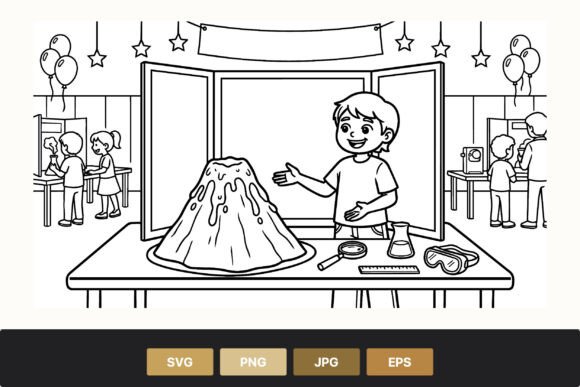
First impression? This is a wonderfully specific and nostalgic illustration. It’s not a generic “science” theme; it’s a boy proudly presenting his volcano at a fair, complete with safety goggles and tools. That specificity is its greatest strength. The mood is clever, educational, and slightly celebratory. The layout is balanced, with a clear focal point on the boy and his project. The detail level in the line art—the table, the magnifying glass, the ruler—is promising but also requires careful consideration for stitching clarity.
This design naturally belongs to projects with a personal touch. Imagine a custom tote bag for a science teacher, a commemorative sweatshirt for a kid who just won their school science fair, or a personalized pillow cover for a student’s dorm room. It speaks directly to educational pride and would be a perfect holiday gift for a science-loving child or a thoughtful addition to baby clothes for a family obsessed with STEM. For small shop owners, this illustration could anchor a whole line of “teacher appreciation” or “science geek” merchandise.
Performance in Real Embroidery Projects
Let’s talk application. On custom apparel like t-shirts and sweatshirts, this design will work best at a medium-to-large scale. The details in the goggles, the volcano texture, and the table elements need room to breathe to avoid becoming a muddy blob of stitches. A standard adult-sized sweatshirt front or back would be ideal.
For tote bags and aprons, the flat, stable surface is perfect. The design’s horizontal layout fits the canvas of a bag panel beautifully. As an embroidered patch, it could be fantastic—offering a badge of honor that can be applied to jackets or backpacks. On pillow covers or tea towels, it becomes a piece of home decor with a story.
Now, a specific scenario: preparing a custom embroidered baby blanket as a gift for a friend whose child is obsessed with volcanoes. You want the design to be cute but clear, durable for washes, and emotionally resonant. The Volcano Science Project Boy illustration hits the theme perfectly. But in execution, you’d need to ensure the finer lines of the magnifying glass and ruler don’t get lost on the blanket’s potentially textured fabric. This is where your prep work as a designer comes in.
Careful Considerations & Where to Be Mindful
Not every project is a perfect fit. This design demands attention in several key areas.
- Small Hoop Sizes: Trying to cram this onto a small cap or a tiny baby bib would likely sacrifice detail integrity. The boy’s features and the project details need space.
- Textured or Stretchy Fabric: Fabrics like thick knits or activewear can distort those clean lines. A good, appropriate stabilizer is non-negotiable here.
- Dark Fabric: Since the provided art is black and white line art, you’ll be relying on thread color contrast. On a dark background, you might need to shift from a black stitch outline to a light-colored one (like white or grey) to maintain visibility.
- Dense Stitch Areas: The volcano itself and the table could become areas of high stitch density if interpreted as fill stitches. You’d need to check the file’s actual stitch construction to ensure it doesn’t become too thick or stiff, especially on lightweight garments.
Also, curved surfaces like caps can be tricky with a horizontal, scene-based layout. The design might need adaptation or placement on a flat panel area.
The Impact on Your Business & Customer
Using a design like this well affects everything from visual appeal to customer trust. Its specific theme creates immediate recognition and connection for the right buyer. That builds product value. For a creative entrepreneur, it offers a ready-made design asset that can be used across products—from physical embroidered patches to printable mockups for your Etsy listings—creating brand consistency for a science-themed shop.
The handmade presentation of a cleanly stitched, thoughtful illustration like this elevates a simple item into a personalized story. That boosts its giftability immensely. For commercial embroidery projects, say for a school’s merchandise or a science museum’s gift shop, it looks professional and theme-accurate, which builds buyer engagement.
Practical Designer Notes Before You Stitch
Here’s my checklist, born from experience, before I’d run this file for a client or my own shop.
- Test on Scrap Fabric First: Always. Use the exact fabric type you plan for the final product. See how the lines hold up.
- Check Thread Color Contrast: Decide if the default black-on-white approach works, or if you need to invert colors for different backgrounds.
- Review Stitch Density & Detail: Inspect how small details like the ruler markings or goggles straps are rendered in the actual embroidery file. Will they be a single running stitch or a satin stitch? This matters for clarity.
- Confirm Hoop Size Requirements: The design dimensions will dictate your minimum hoop. Don’t guess.
- Test in Black & White Mockups: Since the source is line art, preview it on both light and dark backgrounds digitally to plan your thread strategy.
- Use Proper Stabilizer: Match the stabilizer to your fabric. This design’s detail deserves a stable foundation.
- Clarify Licensing for Your Use: Before selling finished items or incorporating it into digital products, confirm the license terms for the Volcano Science Project Boy Vector Art. Is it for personal use, commercial use, or both? This is crucial for craft businesses and Etsy sellers.
In the end, the Volcano Science Project Boy isn’t just an illustration; it’s a story waiting to be stitched. Its charm is in its specificity. With practical testing and mindful application, it can become a standout element on a custom apparel piece, a cherished personalized gift, or a bestselling product in your small shop. Approach it with a designer’s eye for detail and a maker’s respect for the craft, and it will reward you with a finished product that truly resonates.