A Designer's Look at 'Small Steps Big Changes'
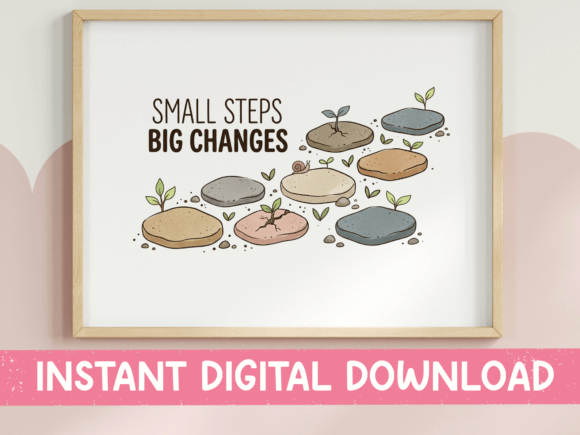
When you encounter a design like Small Steps Big Changes, your first instinct as an experienced embroiderer isn't just to admire it—you immediately start mapping it onto fabric. This hand-lettered script, with its warm black tones and scattered stepping stones, presents a particular mood: quiet encouragement. It feels personal, not shouty. The visual personality is gentle and grounded, which tells me it belongs on projects meant for close connection, not loud branding.
The Natural Habitat for This Design
I picture this embroidery design on a canvas tote bag for a therapist, a soft cotton sweatshirt for a dedicated teacher, or a simple linen tea towel in a supportive friend’s kitchen. The theme is inherently giftable. Imagine preparing a custom embroidered baby blanket for a new parent—the phrase speaks perfectly to that journey. It wouldn’t feel out of place on a nurse’s apron or a cozy pillow cover in a counseling office. For Etsy sellers and craft business owners, this is a design that adds value through sentiment, not just decoration.
Where It Finds Its Strength
In real-life embroidery situations, the success of Small Steps Big Changes hinges on its application. On a sturdy, flat surface like a tote bag or a pillow cover, the script and scattered elements will stitch out with clarity. Using a good stabilizer is non-negotiable here to keep those letterforms crisp. For custom apparel like sweatshirts or t-shirts, positioning is key. I’d place it centrally on the chest or on a sleeve—spots that feel intimate. The design’s moderate detail level suggests it would work well as a standalone feature on baby clothes or as a thoughtful accent on a holiday gift like a cozy blanket.
Its appeal lies in its handmade presentation. When stitched, the warm black script will convey a soft professionalism, fostering customer trust in the quality of your work. For a small shop product, it reinforces brand consistency if your niche is encouragement or wellness. In a digital embroidery file, the scattered stones offer nice visual interest without overwhelming the main message, making for a compelling printable mockup to attract buyers.
The Careful Considerations for Stitching
This is not a design I would throw onto any project without thought. The hand-lettering, while beautiful, contains small details and potentially tight corners in the script. On very small hoop sizes, some of that elegance might be lost. Textured fabrics or very thin fabric could challenge the stitch density, especially in the fill of the stepping stones. I’d be particularly cautious with stretchy fabric; without perfect stabilization, the lettering could distort.
Embroidering on dark fabric backgrounds requires a re-think of the “warm black” description—you must test thread color contrast to ensure the design doesn’t vanish. On curved surfaces like caps, the scattered layout might need adjustment to fit the shape gracefully. And for products destined for frequent washing—like kitchen towels or adult apparel—ensuring the stitches are secure and dense enough to withstand wear is crucial.
A Real Scenario: The Embroidered Tote
Let’s walk through a real case. I’m considering Small Steps Big Changes for a custom embroidered tote bag for a life coach client. My first step is always to test the design on scrap fabric of the same material. I’ll check the small details in the script, see how the satin stitch or fill stitch for the stones behaves, and review the overall stitch density. I’ll run it in both a black and white mockup digitally to visualize it, but the real proof is in the stitch-out.
On the final tote, the design’s visual appeal will rely on its stitching clarity. A clean stitch-out here directly impacts the product’s perceived value and the client’s engagement. It feels professional, not hobbyist. For my craft business, a well-executed tote becomes a signature item, potentially leading to more commercial embroidery projects for similar professionals.
Practical Notes Before You Hoop
Before you commit this design to a project, here are my grounded, practical notes. First, test the design on scrap fabric first. This is your insurance policy. Inspect those small details—are the letter connections clear? Do the stepping stones have clean edges? Compare how it looks on light and dark fabric backgrounds in your software; the “warm black” may need to shift to a truer black or a grey on dark fabrics for readability.
Confirm your hoop size can accommodate the design without forcing you to minimize it to the point of losing detail. Use the proper stabilizer for your chosen fabric type; this design deserves a stable foundation. Crucially, check whether the embroidery file license permits use for both personal and commercial projects. If you’re an Etsy seller or digital product seller planning to sell the finished tote or a embroidered patch, you must confirm licensing before selling.
Think about the end-user. On a personalized gift, this design resonates deeply. On small business merchandise, it attracts a specific, appreciative customer. Its strength isn’t in universal boldness, but in targeted, meaningful connection. That’s where its real professionalism shines.
The Final Impression
Small Steps Big Changes is a design that asks for thoughtful application. It’s not a one-size-fits-all graphic. Its value is unlocked when paired with the right project and executed with technical care. For the designer, crafter, or entrepreneur looking to create something that feels genuinely supportive and well-made, this design offers a wonderful foundation. It reminds us that in embroidery, as in the message itself, the quality of the small steps determines the impact of the final product.